
The Business of Mushrooms

Tucked in different corners of Bengaluru are two people who, on the surface, have nothing in common. Different upbringings, different motivations, different worlds. But they’re both deeply, almost stubbornly, devoted to the same quiet kingdom: mushrooms. A genus that grows in silence, thrives in the dark, and casually produces experiences that range from nutritious to…well, transcendental.
First, there’s Kavitha. She comes from a traditional farming family from rural Karnataka, where the economy of daily life left her dependent on everyone but herself. So one day, she left. Not dramatically, just a quiet decision to find a livelihood she could call her own.
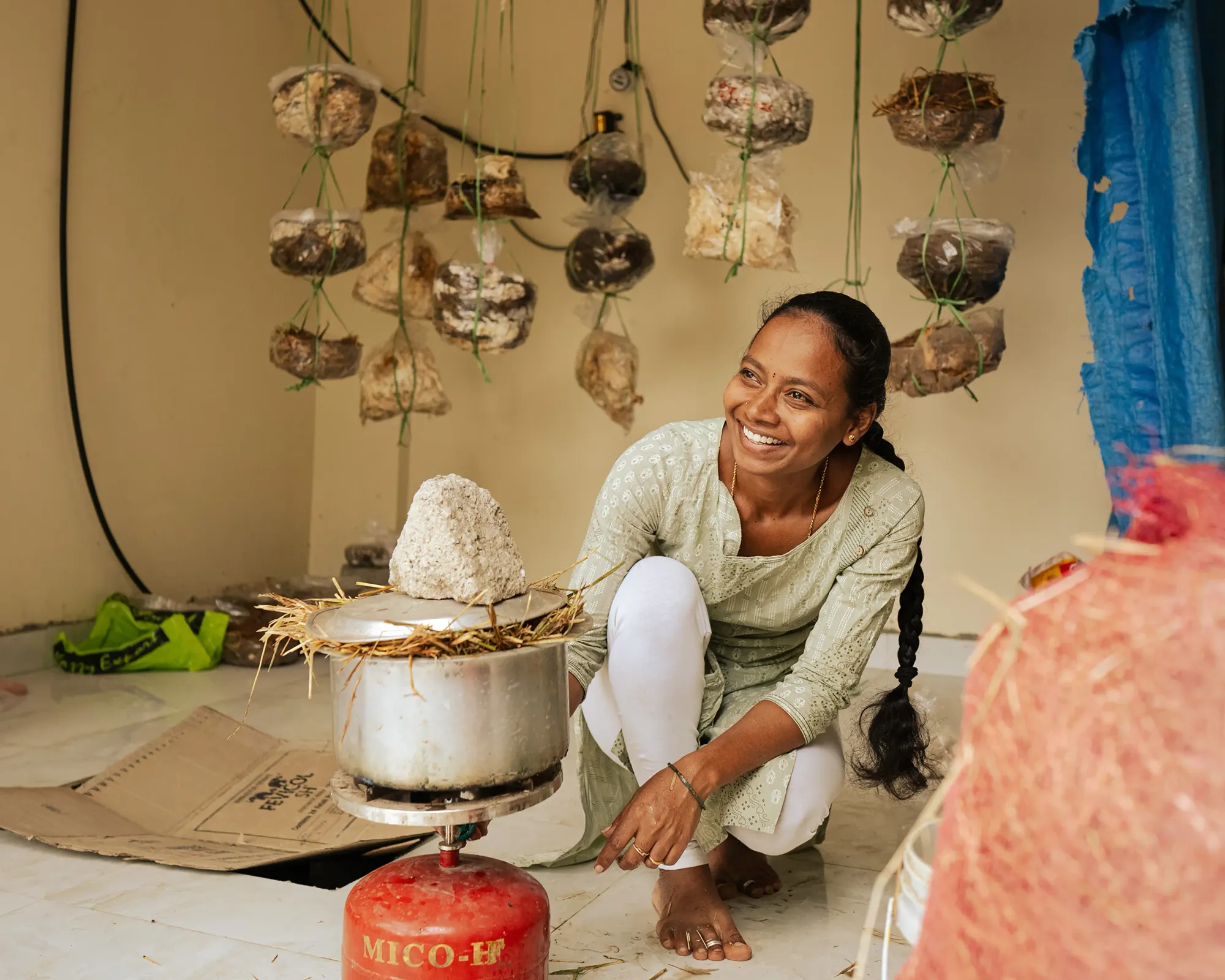
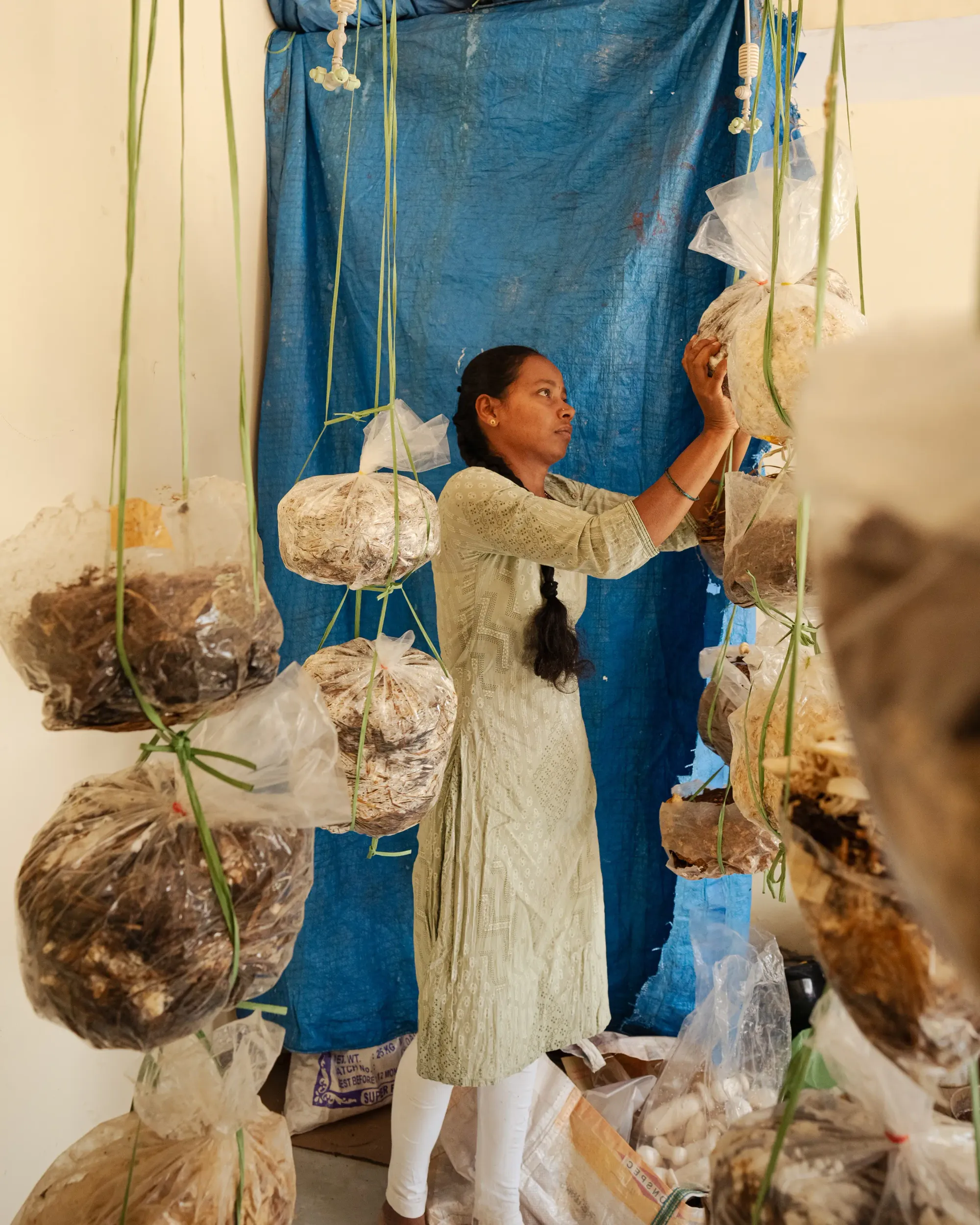
Her first big idea? Donkey farming. On paper, viable. In practice, a complete disaster. But failure does strange, generous things if you’re paying attention. In the mess of that experiment, she noticed mushrooms. Low investment. Reliable demand. A gap in Bengaluru’s fresh supply. She tried again.
And this time, it worked. Slowly. Unevenly. With patience that only farming can teach
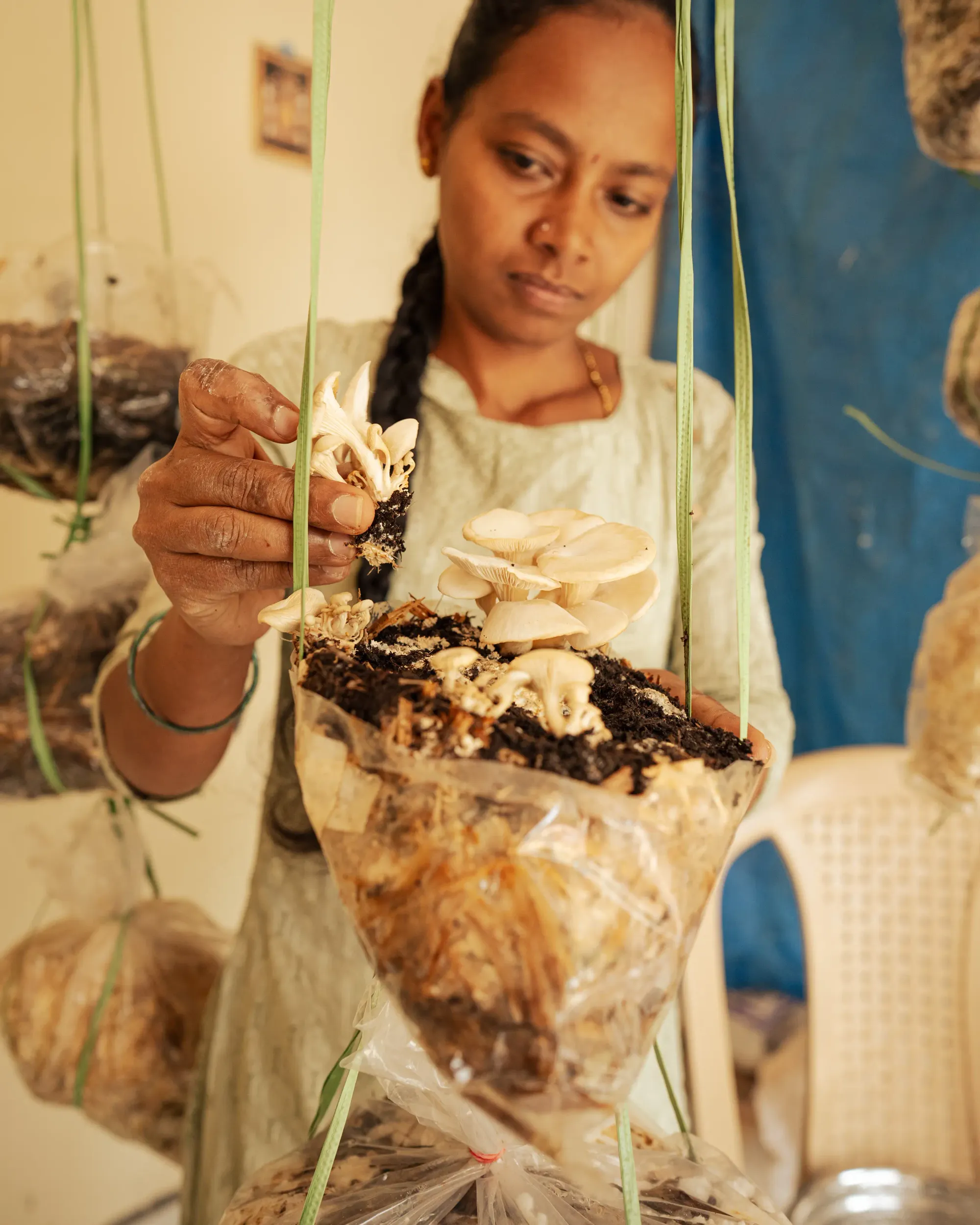
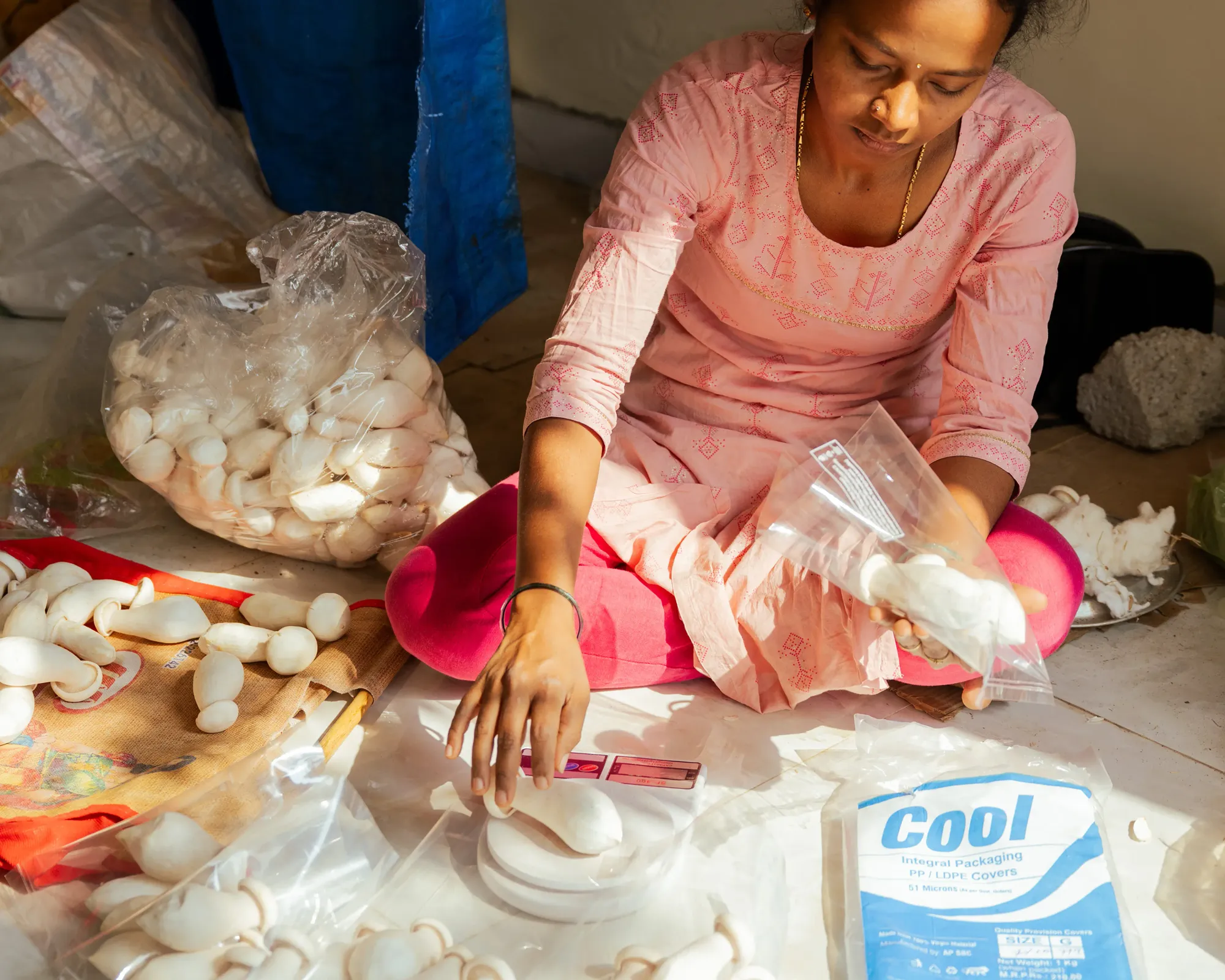
“In the beginning, it was incredibly difficult, especially as a woman from a rural background with financial limitations. But I’ve grown into it,” she says. “It takes about 41 days before you see anything. But when the mushrooms finally bloom, all the hard work is worth it.” She’s now in conversations with Zepto, hoping to shift from customers showing up at her doorstep to something more scalable.
Across the city in a completely different universe, an ex-marketer named Biplab Mahato was having his own quiet pivot. The 2020 lockdown pushed him toward holistic healing and mushrooms. Medicinal, mysterious and resilient, mushrooms became his gateway to a different life. What started as experiments in his mother’s kitchen garden in Jamshedpur turned into Shroomin, his small urban farm with a mission: grow great mushrooms and decode them.
He’s currently documenting a rare species found only in parts of Jharkhand.
“These mushrooms grow here,” he says. “Each species is a superfood with a story. Most of the foragers are women who really hold that knowledge. But this knowledge is at risk of disappearing. I want to archive it, share it, maybe even bring it into school classrooms. Imagine kids learning about ecology through something that actually grows in their backyard.”
Both Kavitha and Biplab are, in their own ways, running the same marathon at different speeds. Kavitha wants to scale; Biplab wants to go deeper. She thinks in markets, he thinks in ecosystems. But their stories bend toward a similar truth: nothing about this kind of work is linear. There are no glossy milestones. Just detours, pivots, experiments, and the occasional small miracle.
Their ambitions will shift. Their methods will evolve. But the instinct they share, the ability to move through uncertainty with curiosity, is what sustains them. Does success look less like climbing a mountain and more like growing a mushroom? I wonder. Because at some point, the mountain you climb will ask you to ascend. But a mushroom consistently asks you to pay attention.