
River Doesn’t Do Clichés

“Does it have GPS navigation?”
This is one of the most frequently asked questions our sales and retail teams answer on a daily basis. When they respond with a proud no, the reactions are a mix of surprise, puzzlement, curiosity, and even shock at times. Once they hear the reasoning, the initial confusion turns into heads nodding in agreement.
Let me explain the reason with a backstory of River’s early days.
When Vipin put together the Industrial Design team in 2021, he chose people with a genuine drive over corporate experience. He looked for those who longed to build a truly different kind of vehicle, but lacked the platform and resources to do it. These were creators who had already proved their mettle in competitions like BAJA SAEINDIA and Formula Bharat. That same spirit is what encouraged them to take the plunge with River.
Don’t always abide by industry norms—was the unofficial team motto. “This, coupled with wanting to build a vehicle we were proud to sell while keeping costs in mind, led us to think out-of-the-box,” says Ranjan Nair. He’s part of the first hires made by Vipin. Ranjan began as an Engineering Trainee and is now a Lead Engineer with the Vehicle Architecture team. Quite a leap in just 5 years.
“We had better clarity on what we didn’t want when developing the Indie. Because we had a shared ideology, it was easier to rule out ideas.” Vaibhav chips in. He too has been with River since the start, and is now one of the key decision-makers for product design development.
So what was unanimously ruled out?
No GPS navigation.
No LCD screen.
No touchscreen.
No bloated features.
Why? Because Indie didn’t need these features.
Most vehicles today cater to a user’s wants but the Indie focuses on the user’s real-life needs. That meant making the whole user experience seamless, and not just the ride itself. Vaibhav points to the decision to skip a touchscreen as a prime example: “Our users have multiple tasks to do throughout the day. So we had to chalk out how not to complicate their lives by adding another step to their routine.”
Instead of forcing riders to memorise passcodes or wait for boot-up screens, the team leaned into pure muscle memory: a physical key. A key just works. You plug it, turn it, and ride—no dead displays, no software glitches, definitely no extra mental pressure.
The same pragmatic logic applied to navigation. The team recognised that the Indie would mostly run on familiar city roads. Petrol scooters cover far greater distances without built-in navigation screens, and riders manage just fine. So why add the cost and distraction of a screen? For daily city runs, built-in GPS navigation was clearly a nice-to-have, not a need-to-have feature.
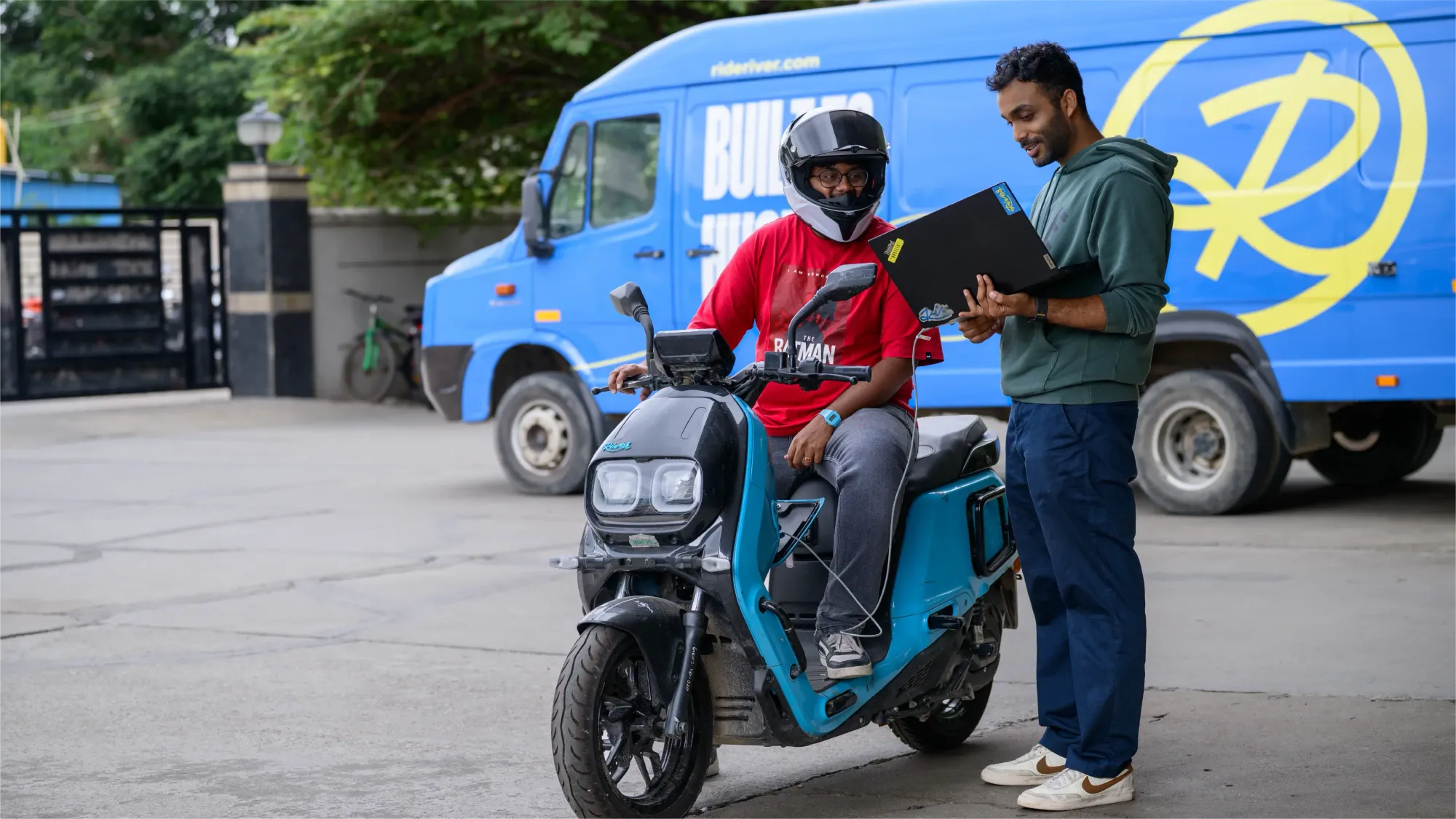
The team’s focus around daily familiarity didn't stop at digital features. It shaped how the vehicle was engineered too. “We didn’t limit ourselves to existing EVs, and benchmarked IC engine two-wheelers as well,” Ranjan explains. “We wanted to understand what was familiar to our customers and deliver that exact feeling the moment they twist the throttle or hit the brakes. That’s also how we went on to develop adaptive regenerative braking.”
On a petrol scooter, engine braking lets you hold steady speeds or slow down smoothly without constantly grabbing the brakes. Electric scooters lack this ability. Their instant power can cause the vehicle to climb to high speeds with even a slight throttle, forcing constant corrections. Moreover, most electric scooters require letting go of the throttle completely just to trigger regenerative braking.
River fixed this by studying how petrol engines maintain control. The team designed a system that activates regenerative braking while your hand stays on the throttle. Ease off the throttle slows the vehicle down smoothly. Roll back a little provides gentle braking, while rolling back even more delivers stronger stopping power. The entire twist grip becomes usable, giving riders a natural, effortless feel while recharging the battery in the background.
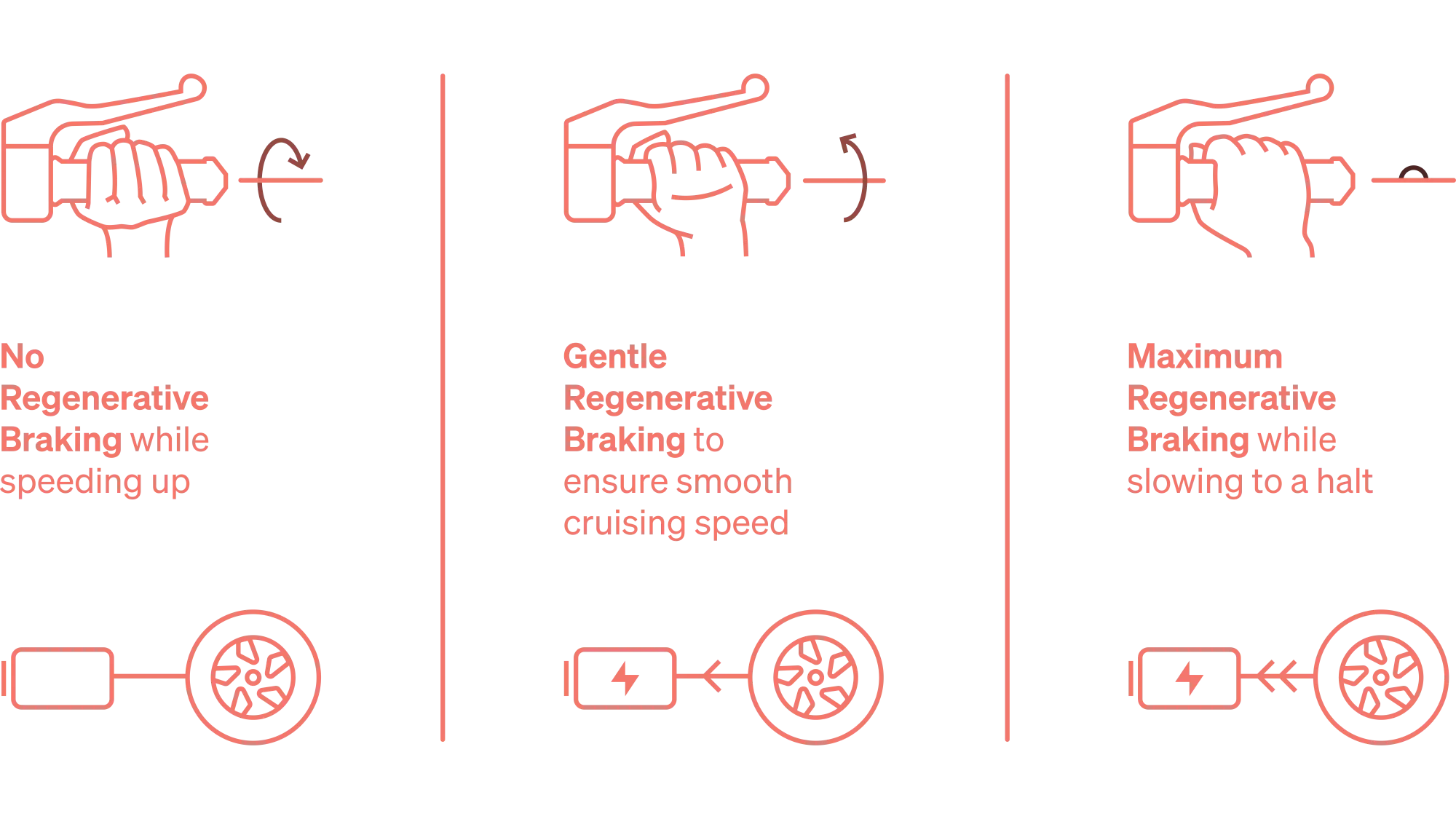
When adaptive regenerative braking was introduced in the Indie Gen 1, River became the first company in the electric vehicle industry to offer this in a two-wheeler.
By now, it’s easy to see a pattern of how River doesn’t do conventional things or clichés. We follow no bandwagon. Every choice we make comes back to what actually serves the user in daily life. We skip what we feel is unnecessary not to make a statement, but to build something simple, dependable, and genuinely useful.