
Reading in Clay

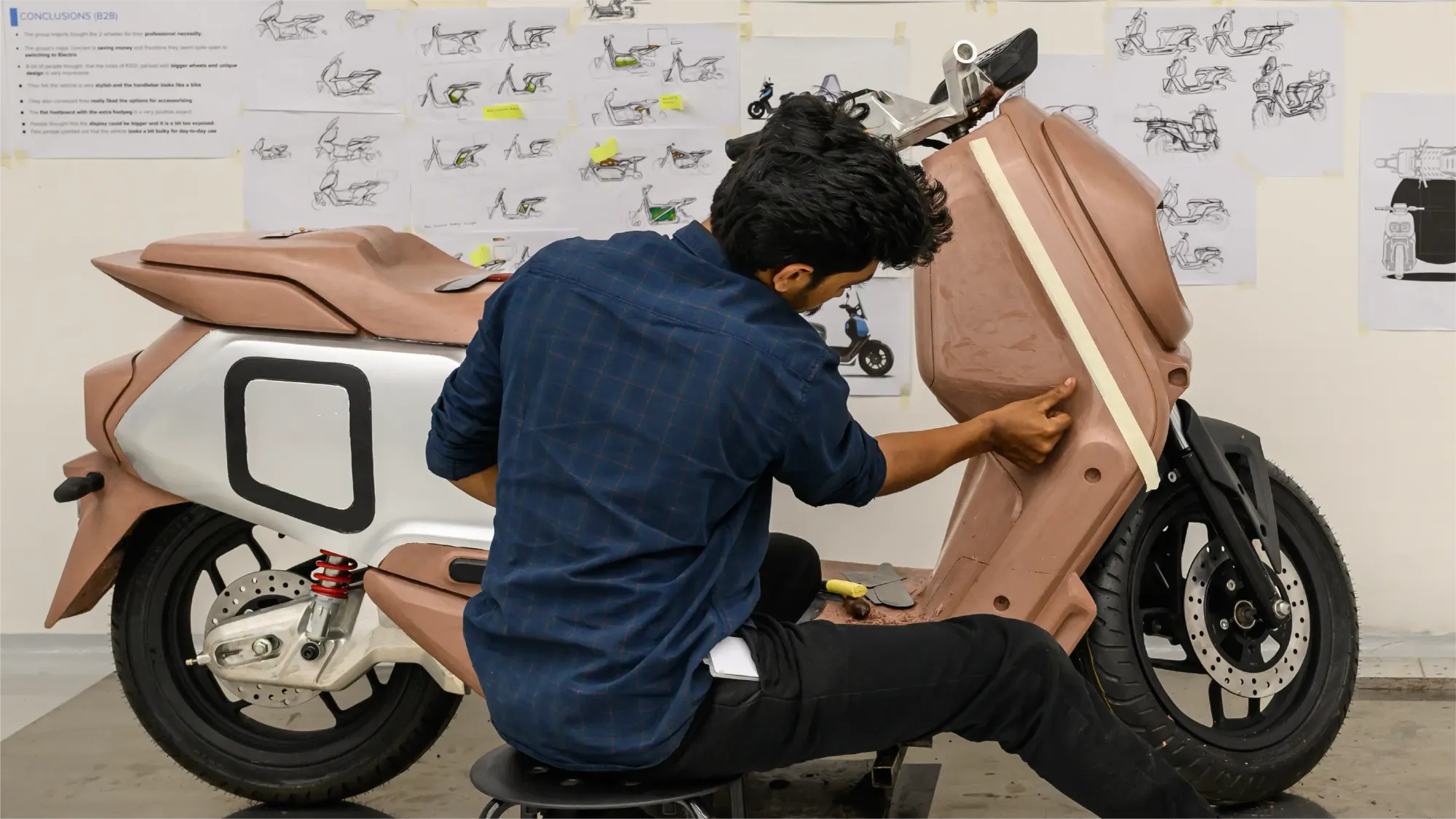
The clay department’s workshop is kept deliberately plain: bright white tube lights overhead, and a temperature that’s never allowed to drift outside 19 to 25 degrees. Any warmer and the clay softens unpredictably under the modellers’ hands; any cooler and it turns stiff and unworkable.
Inside, a tiny team of three works.
Karthik Suresh, Swapnil Chingonda and Audhiraj Goswami have spent years learning to read a scooter’s surface with their hands. Times have changed. Most of the industry has moved on to CAD, simulation, 3D printing. But River has chosen to stay behind, in a small room full of clay, because some details don’t give themselves up to a screen. A clay model lets you test a scooter the way a screen never can: you can sit on it, feel the lines and the angles under your hands, manoeuvre the handles, and ask your own body whether it fits. A screen can flatter a form. Clay shows you where it wouldn’t.
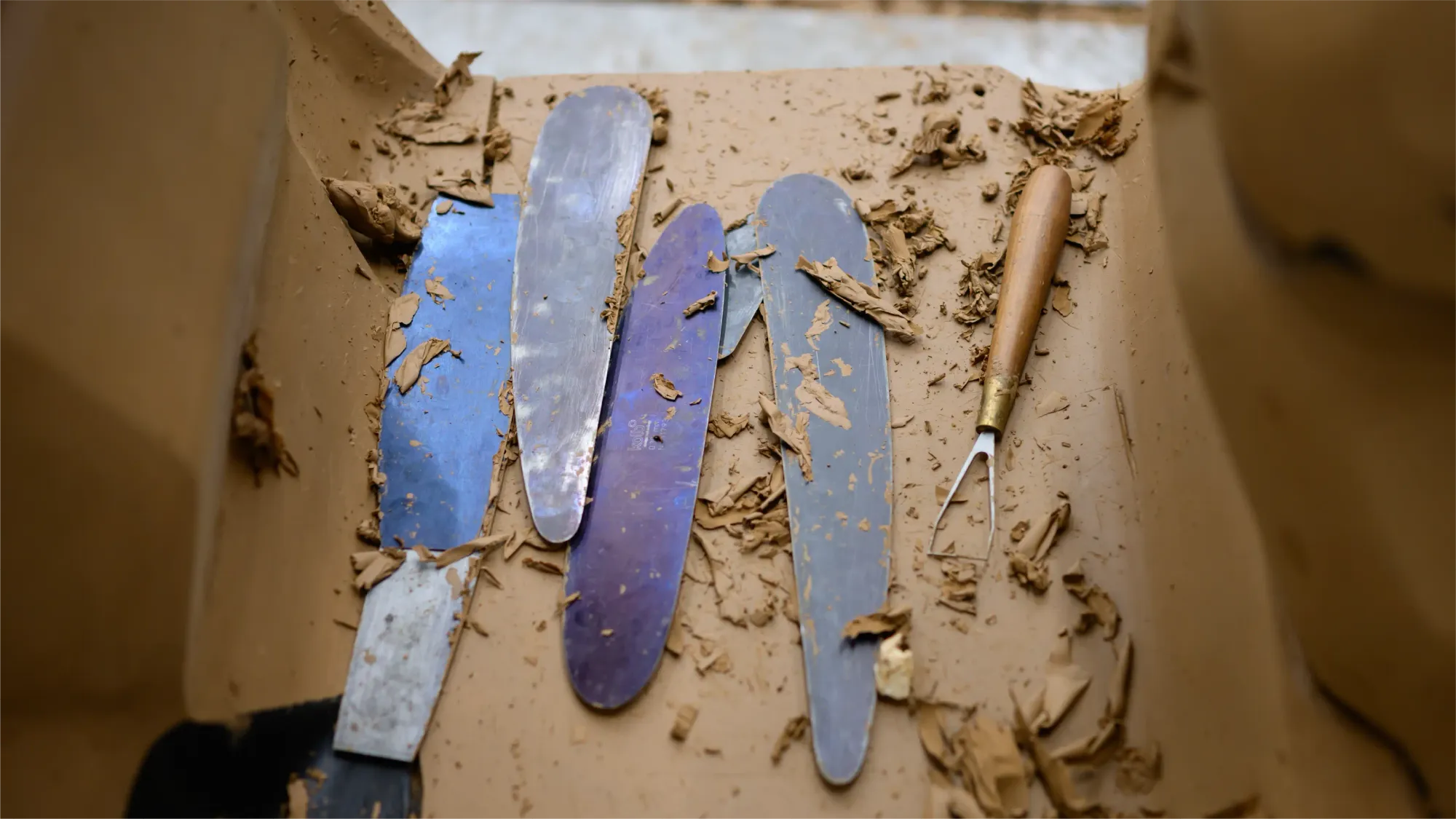
The three were college mates before they were colleagues, and they arrived at River separately. Swapnil first, helping shape the Indie from the very beginning, then Audhiraj and Karthik following after. None of them set out to do this. Life brought each of them, in its own way, to the automotive clay sculpting PG course at MIT Pune. And clay, a rather difficult subject to fall in with, held onto them.
Making a life-size clay model of a scooter starts with a finalised sketch. Designers pin it to the studio wall, and the three begin building outward from a base frame, shaping the surface by hand. They don’t model the whole scooter by hand, though. One half is sculpted, and the other is replicated by machine, mirrored to keep the proportions exact.
Karthik says it’s his least favourite step. Manoeuvring the intimidating machine does take a lot from one, but getting the proportions right matters. Swapnil remembers models that had to be scrapped and rebuilt entirely because the proportions were off.
Even with volume, proportions, and lines in mind, the team doesn’t follow the design to a t while sculpting. They let instinct take over, and that instinct often shows up as a series of questions: Does this bend feel natural? Should this curve be more curvy?
“This is the most sensory-oriented part of designing a scooter,” Swapnil says. “It’s the stage where the real tests happen.” Do the legs and hands fall where they need to? Is the ergonomic triangle accommodating? How would a tall rider feel on this scooter and what about a short one?
Once a model’s silhouette is finished, it’s scanned and analysed, then cleaned up before it’s sent onward to be built. Even at this stage, the team doesn’t treat the blueprint as final. They adjust as they go, guided as much by instinct as by spec.
And in clay, a mistake is another chance to look at form differently. “Redo it, and keep going.” The team unanimously agrees.
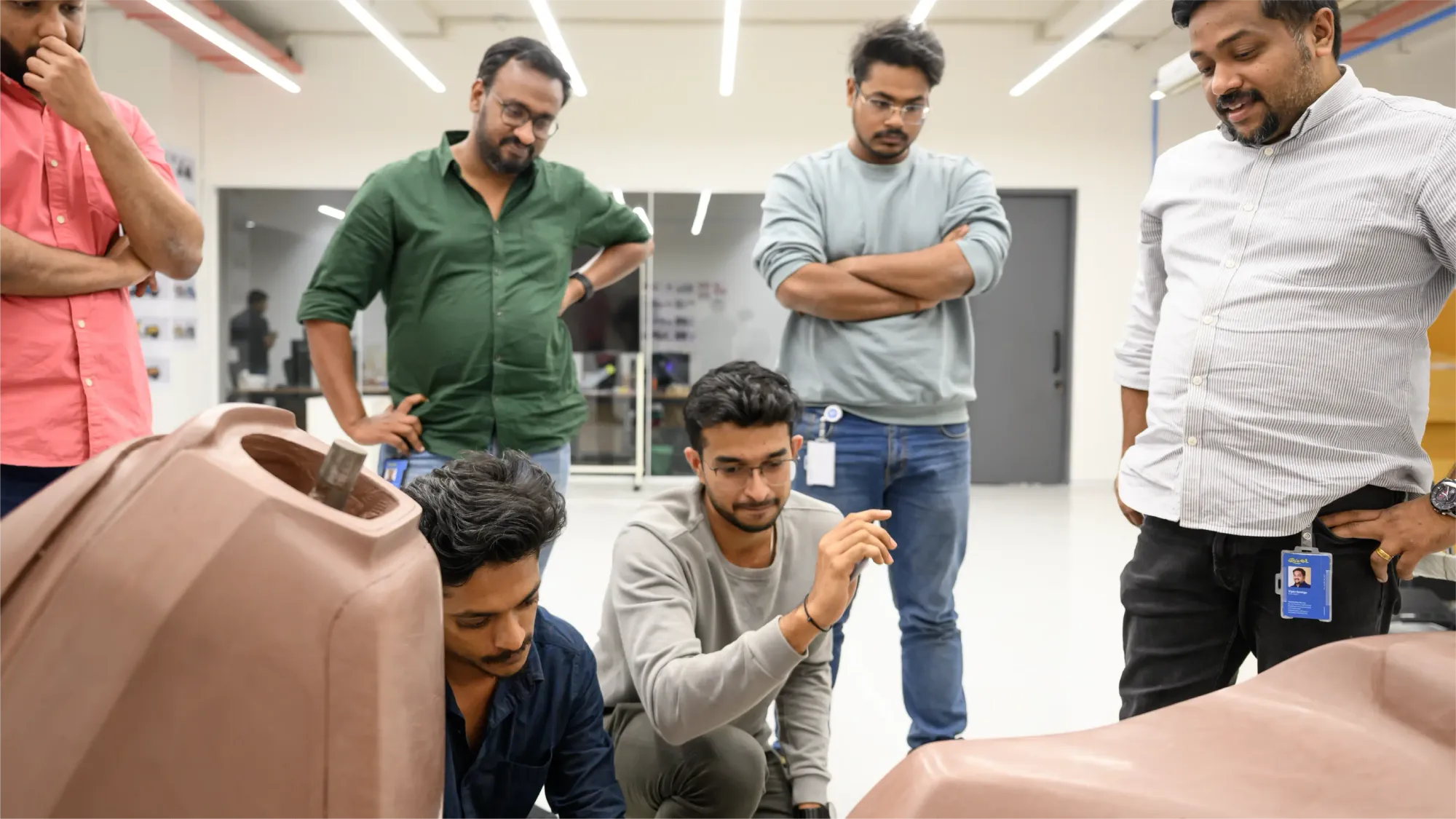
Swapnil remembers the first days of working on Indie. “The brief was simple on paper: build a scooter that was instantly identifiable and built around utility.” Simple briefs rarely stay simple in clay. Alongside Vipin George and Design Head Sanoj Vazhiyodan, Swapnil modelled and remodelled the Indie until everyone in the room was convinced.
Ask the team why clay still matters in an industry that can simulate almost anything on a screen, and the answers turn reflective rather than technical.
“A scooter,” Swapnil says, “is the most intimate vehicle there is. You touch far more of its surface than you would a car’s, while riding it, washing it, resting a hand on the seat while it’s parked. That constant contact means touch has to guide the design, not just the eye.” It’s also what makes sculpting a two-wheeler harder than a four-wheeler: there’s simply less surface to hide an error, and more of it meets skin.
“Clay is where the feel of a scooter gets communicated,” Audhiraj observes. “Not described. Felt.”
Vipin frames it a little differently.
Design, he thinks, is a mix of engineering and art, and clay is where the art happens. It’s when human touch and emotion get translated into a machine, so that the machine ends up speaking back to whoever rides it.
Vipin points out that a sketch is a 2D read of a scooter; a clay model is the first 3D one, and there are always discrepancies between what works on paper and what works at full scale. It’s the clay stage that tests hand position, foot position, and the angles. It is also when you get an idea of how volumes actually meet in real space, where panel lines fall, how one surface transitions into the next: things a flat sketch can only gesture at.
The industry’s newer approach is to go from sketch to 3D digital model to milled clay sculpture. The latter is a mechanical process that carves a form directly from a digital file. It cuts out the need for a person by a mile. It’s faster but far more expensive.
“Our clay team shapes a scooter by hand, and is more efficient.” Vipin grins proudly. But there’s another reason why this process means so much, “Design that comes from a thinking mind ends up more original. A milling machine can’t give you that.”