
Growing Something New

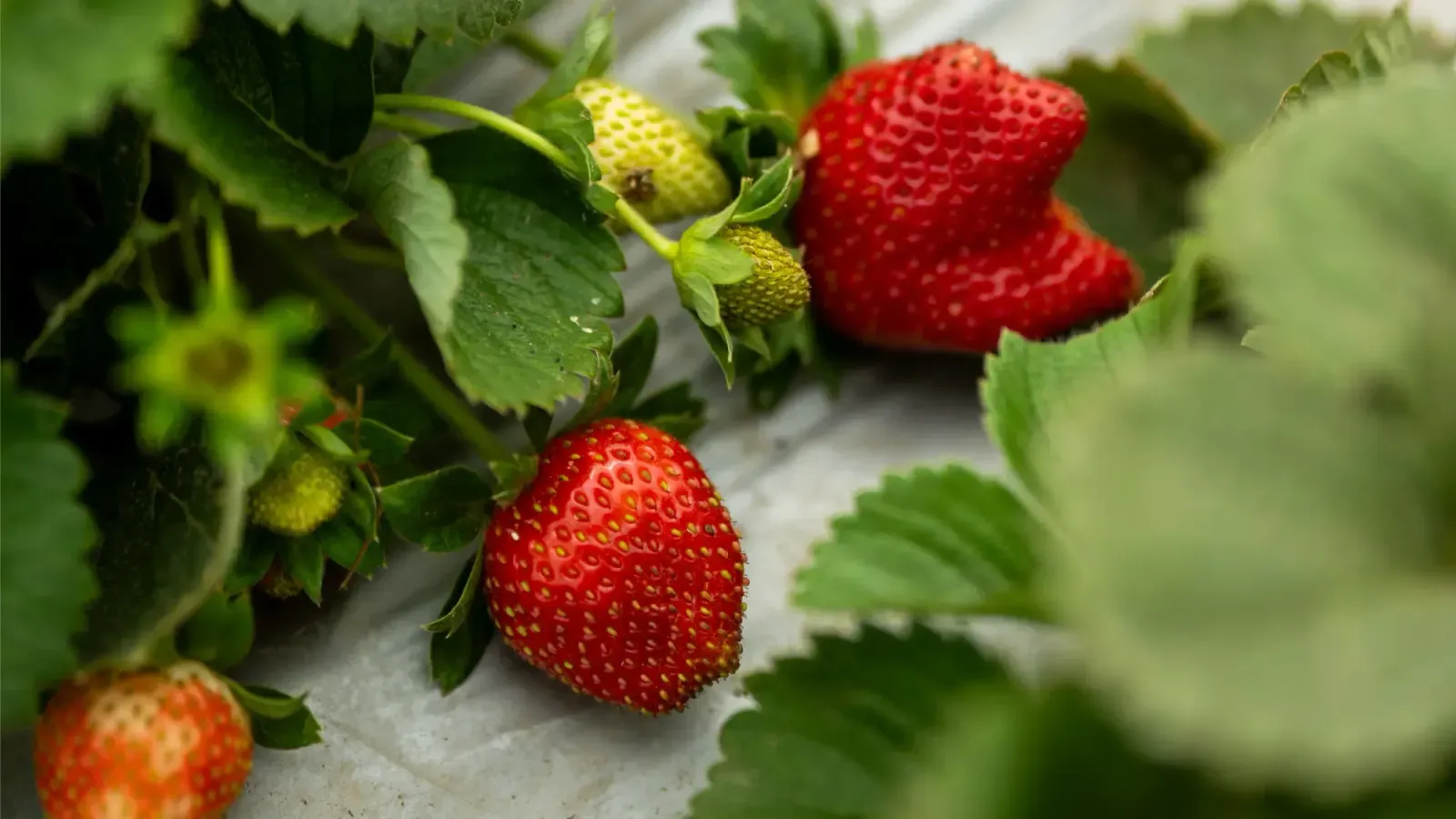
The first strawberries to sprout at The Bangalore Berry Company were painfully small, misshapen and a little ugly, but the dopamine kick they gave Ramakrishna knew no bounds. How could they not! For months, he had poured his time, savings, and faith into a crop he had never grown before. Every mistake, every failed experiment led to this moment. Those imperfect berries were proof that something was working.
Walking away from certainty
Just a year prior to that first surprise harvest, Ramakrishna had walked away from a life he’d built in Canada over 17 years.
When the COVID-19 pandemic brought the world to a pause, his elderly mother expressed the desire to return to India for good. Coincidently, he too, felt a silent need to put Toronto behind. Around the same time, a few friends in India began discussing a business idea. The plan was just a faint blueprint, but something about it felt right.
So, in just 30 days, he quit his job, vacated his house, packed up his life, and returned to his roots in Kakinada, Andhra Pradesh.
When he left Canada, he knew very well that everything around him, predictably and inevitably, was about to change. No more waking up in the familiar concrete jungles of Toronto; the comfort of a corporate job and stability in daily routines suddenly became a distant dream.
"Most techies leave their job because they're tired, but not me," he observes. "I loved what I was doing." Ramakrishna was not someone who’d run away from changes. And the possibility of building something of his own gave him hope.
The idea
Fruit picking, as an activity of leisure, was very popular in the West but not in India. This thought excited Ramakrishna. He and his friends agreed that strawberries were the best fruit to begin with. It was a pretty fruit; red and glossy. It was a fairly commercialised fruit too, and had kids drooling over it.
They wanted to set up the farm in Bengaluru; surely, the city's crowd would want an escape from its mundanity and traffic! They spotted a market opportunity in a population that was increasingly health-conscious and looking to invest in sustainable, farm-to-table experiences. They'd found the perfect plot to lease, too. Two hours from the city, winding roads, endless fields, and countless cows will lead you to 10 acres of land. There, grew a small forest of Allahabad Safed guavas that vouched for the soil's fertility. The sweet scent of the fruits intoxicated the surroundings at all times. Thus, The Bangalore Berry Company had found its place in the world.
Can this actually work?
The initial six months after returning to India went entirely into research.
The team scoured the internet, watched videos, read farming guides, and absorbed everything they could find about strawberry cultivation. But theory alone could only take them so far.
That’s why Ramakrishna and his friends decided to walk into the Indian Institute of Horticulture Research (IIHR). It was an impulsive decision, but one that’d prove to be beneficial in the long run. At IIHR, someone pointed the party towards the director of the institute. He was kind enough to meet them for 30 minutes. Ramakrishna recounts that conversation as fruitful. The director nudged them towards growing Italian strawberry varieties rather than just sticking to the popular American ones. It was also a reality check. The director listed out the problems they could possibly face, but the new farmers were too determined to give up.
On another day, a group of local experts visited the farm. They gently discouraged Ramakrishna from growing strawberries. "Stick to guavas," they said. It came from a place of concern, but the team was in too deep to just throw their hands up without even trying. "That kind of blind confidence was necessary at that initial stage," Ramakrishna laughs.

Learning the hard way
Safe to say, that blind confidence really did help. For his own endeavour was not devoid of mistakes, and each one taught him more than the internet ever did.
The mother plants are imported from countries like Italy and America. They arrive by flight to different parts of the country, frozen and sealed. These are then transported to Bengaluru by road or rail. In the first year, a bunch of mother plants arrived by rail on a rainy day. As Ramakrishna carried them to his vehicle, the damp boxes gave way and the plants plopped onto the floor. On another occasion, a new variety of strawberry plants he ordered bore no fruit. He even planted the saplings in a new patch, and once again, none of them yielded. These mistakes taught him about planning, experimenting with new varieties, and the importance of soil fertility. He had to—grudgingly—cut down all but a line of guava trees to use that fertile soil for strawberry patches.
A year on the farm
Through trials and errors, Ramakrishna finally cracked the code.
The strawberry crop cycle in Bengaluru starts as early as the end of March, when the land is prepared by tilling and sun-drying the soil. In April, legumes are sown. These help enrich the soil by promoting beneficial microbes and improving fertility. Around May–June, the mother plants are imported and maintained at the plant nursery. Small cups filled with cocopeat are placed near them. The runners from the mother plants grow into these cups and sprout daughter plants. A single mother plant can produce about 10–12 daughter plants. By July, the legume crop is cut and fed back into the soil as green manure.
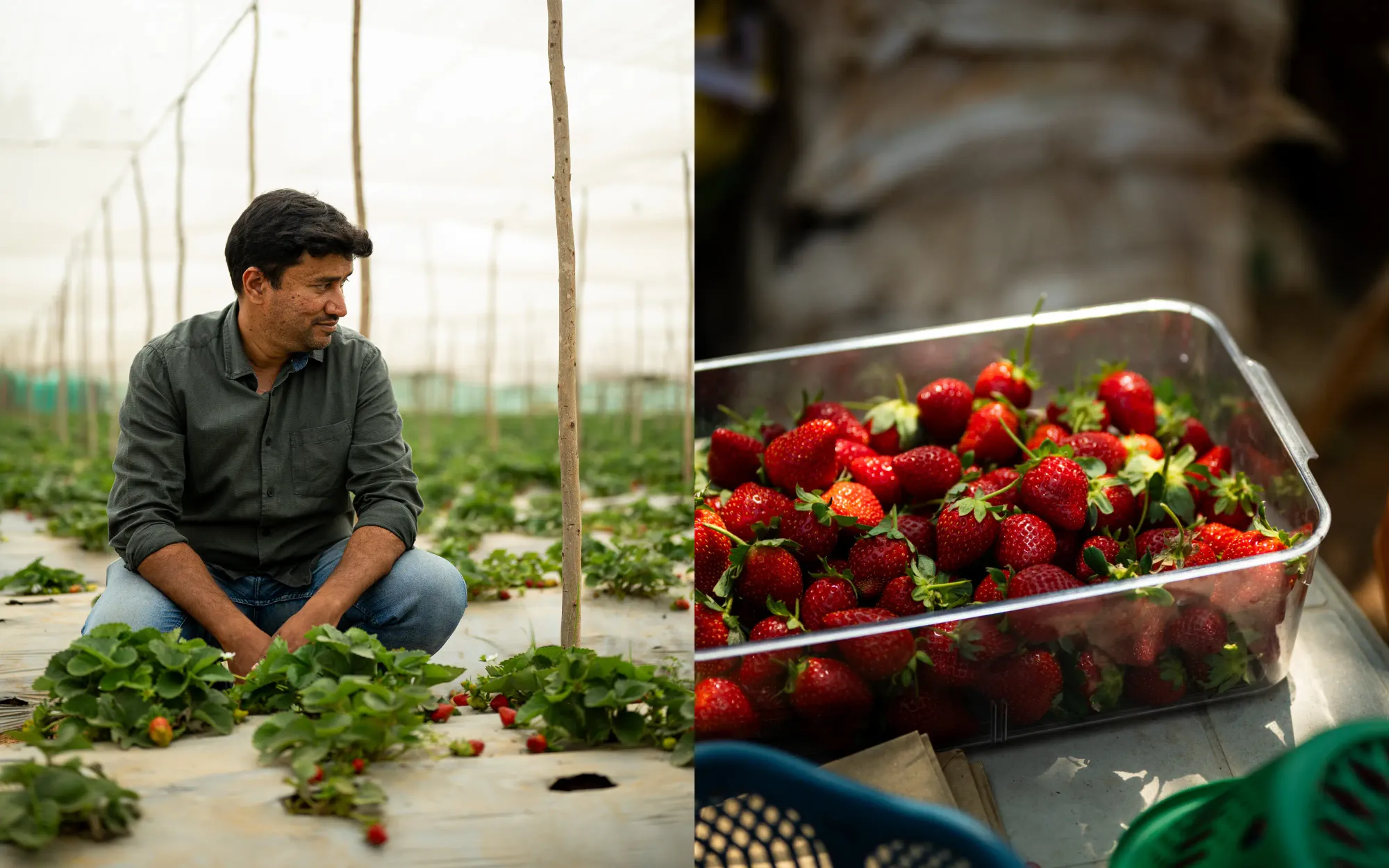
By September, the young strawberry plants are transplanted into the prepared fields. Within two months, delicate white flower buds begin to appear. Pollination takes place naturally and by December, the white blooms give way to the green of baby strawberries. Strawberries thrive in cool conditions, so harvesting continues through the winter until March.
And so, the fruit picking season begins.
Come, pick a strawberry
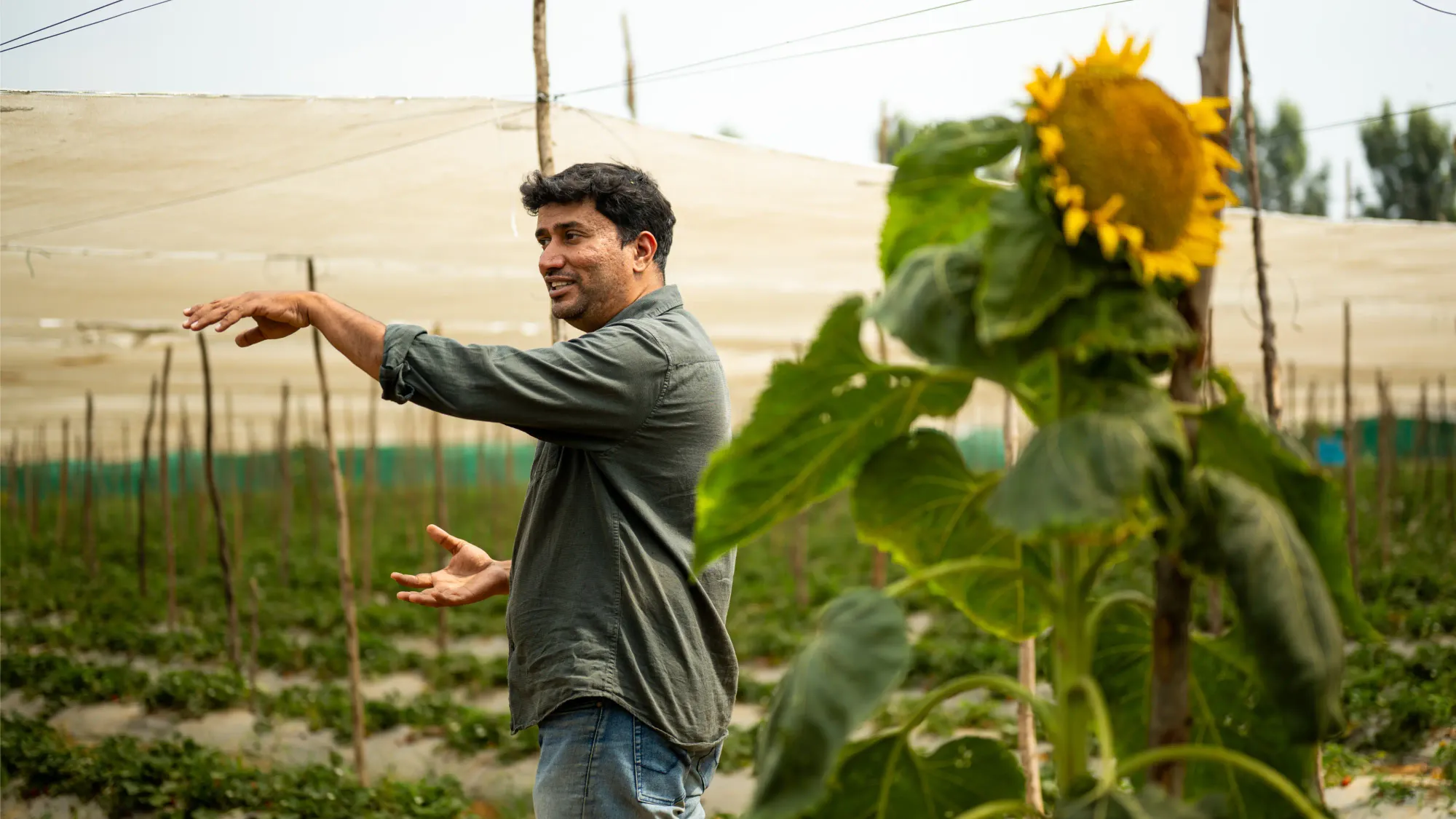
During the fruit picking season, Ramakrishna opens the gates of The Bangalore Berry Company on weekends to visitors. From tiny, wobbly toddlers to wise elderlies, everyone enjoys the farm. He tells the children that all the fruits at the farm are theirs, but not the sunflowers bobbing their big heads—those belong to the birds. The sunflowers distract birds from the strawberry flowers. He also plants broccoli to attract pests, because pests love broccoli more than strawberries. Since Ramakrishna encourages his visitors to eat fruits right off the plants, he cannot risk using any unnatural fertilisers—hence the use of broccoli and cabbage as safer alternatives.
The people behind the farm
Men are largely hired for tilling the soil, ploughing the land, and preparing it for a new cycle. But according to Ramakrishna, it’s the women who are the backbone of The Bangalore Berry Company, “The local women help with the major chunk of the work, tending to plants with a steady care that no machine can replicate.” They water them, work fertiliser into the soil, and pinch off the heads of flowers that have trailed and withered, so the plant's energy goes where it matters.
Weekdays are quiet. There are no tiny prying hands in the vicinity. But nature does not take a break; the fruits do ripen and need to be plucked regardless. To prevent these from going bad, the women make all kinds of jams and ice creams. The farm’s cafe offers a variety of strawberry-focused dishes. Aloo parathas with strawberry thokku (a delicious, spicy and tangy chutney), nachos with strawberries, a classic strawberry shake, and strawberry sandwiches are some of the crowd favourites.
When the season winds down and the plants are cut back, nothing goes to waste. Neighbourhood goatherds collect the cuttings and carry them off to feed their animals.
What's next
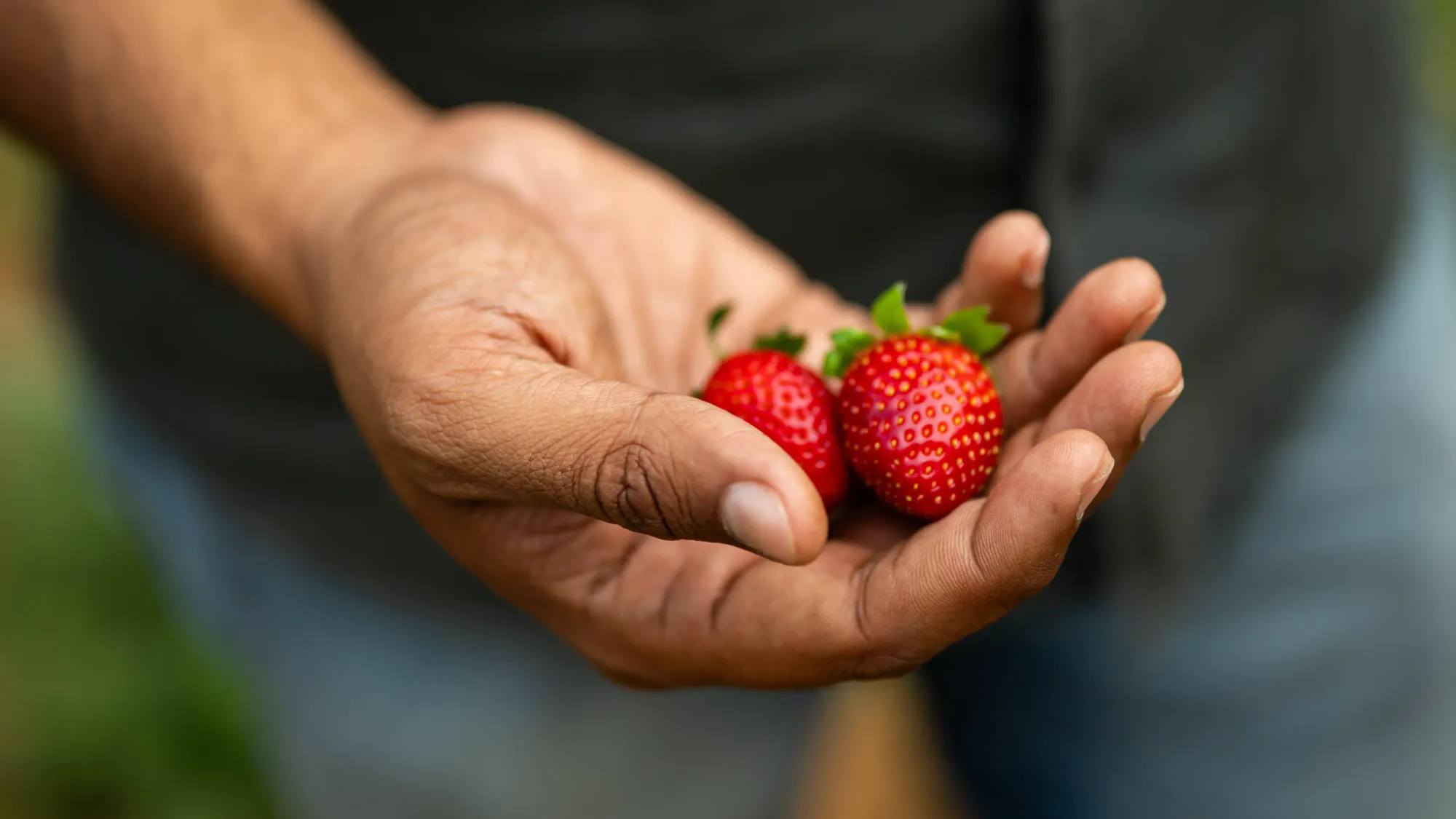
Five years on, Ramakrishna now has two farms where he grows strawberries every year, along with other crops. His friends, with whom he had started the business, either got pulled back to their corporate careers or found a different path. But not Ramakrishna. Maybe it was the dopamine kick those first barely-strawberry bulbs gave him, or maybe it is his passion that goes into everything he does. Even when months yielded no fruit, Ramakrishna never quit. It didn’t even occur to him. "I had enough savings from my 17-year-long corporate career. The money gave me the confidence to start the farm. For that, I'm grateful," he explains.
In the future, he wants to try growing other crops; melons, mangoes, and some more vegetables. The idea is to bring people closer to nature. The Bangalore Berry Company has expanded beyond its signature fruit-picking events, collaborating with local NGOs to host special gatherings for children. Tiny humans walk into the farm to play and have fun. And just as he envisions, a community is slowly being built around nature.
To young people who want to try their hands at farming, Ramakrishna asks them to be cautious. Do not expect immediate gratification. Be patient.
Ramakrishna is a proud owner of a Spring Yellow Indie since April 2025.