Good Design is Such a Big Deal for Us

A quick look at today's electric vehicle (EV) landscape reveals a frantic race to claim the most extreme label. From two-wheelers to four-wheelers, some of India’s oldest auto brands are diversifying into EVs, and are scrambling to call their vehicles ‘the’ one in the category, ‘tech powerhouses’, or ‘next-generation giants’. But when a company defines itself purely by its tech or its powertrains, the vehicles they build end up being perfect for showrooms rather than the streets. The focus usually shifts to adding bloat, such as bigger screens, faster-than-speed-limit modes, and complex digital features that look incredible, but add friction to a Tuesday morning commute.
When Aravind and Vipin took the leap to build River, the earliest concepts focused on the physical product—the ‘feel’, the structural frame and the engineering parameters. As the team spent more time understanding the real world our vehicles would occupy, we were better equipped to incorporate design solutions from the customer’s perspective. But what really got the team to embrace this design-centric approach happened before River was even conceptualised—the scooter sketch.
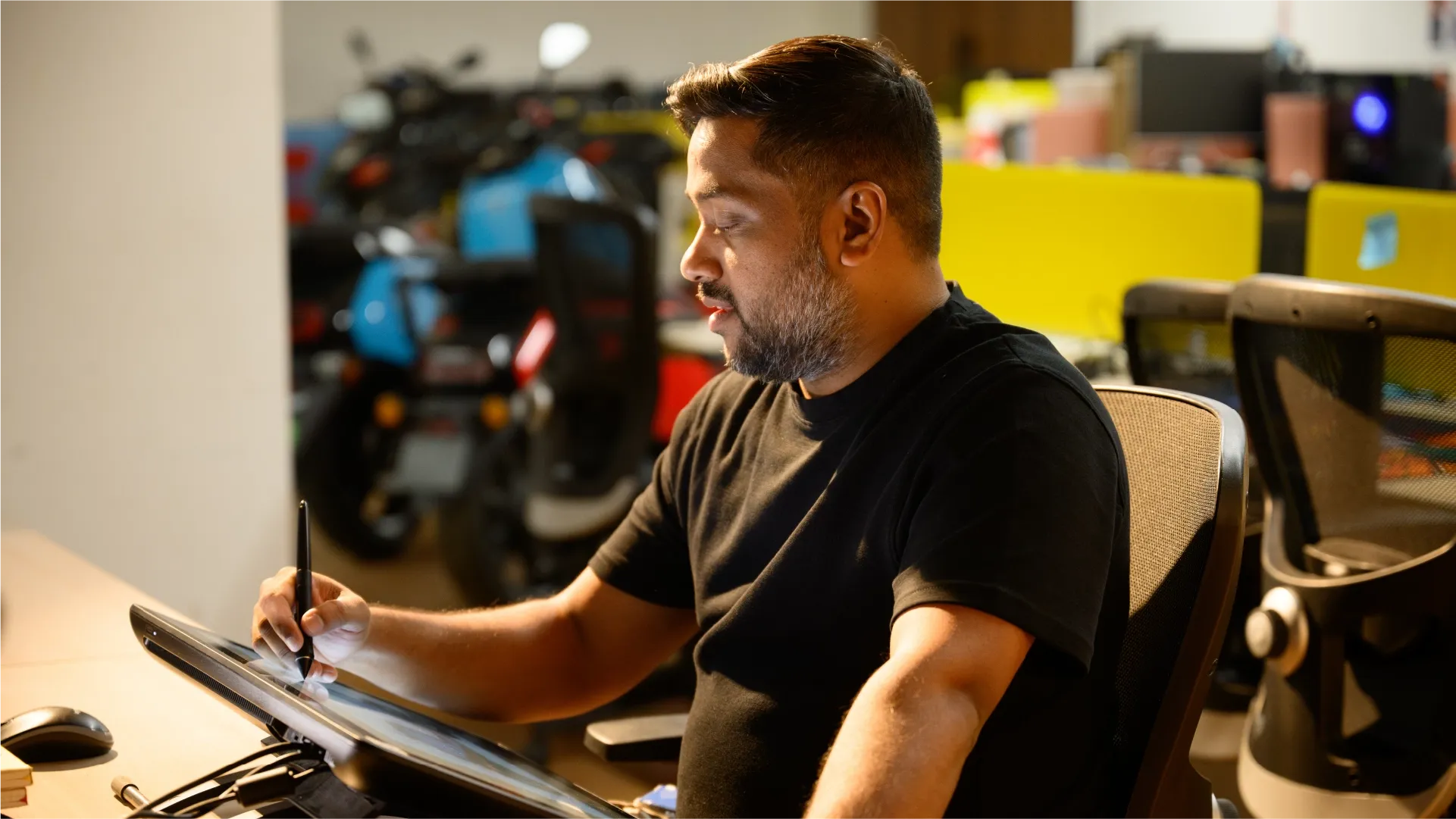
Like any good designer with a strong desire to solve a problem, Vipin spent much of his leisure time sketching a different two-wheeler. Several factors influenced how this vehicle took shape; his instincts about a vehicle's full capability and his father’s rubber plantation operations. He also observed the public’s frustration with vehicles that only handled commuting, as well as the quick fatigue faced by tall riders. Iteration by iteration, month by month, Vipin sketched a functional tool that fit right into a rider's daily life.
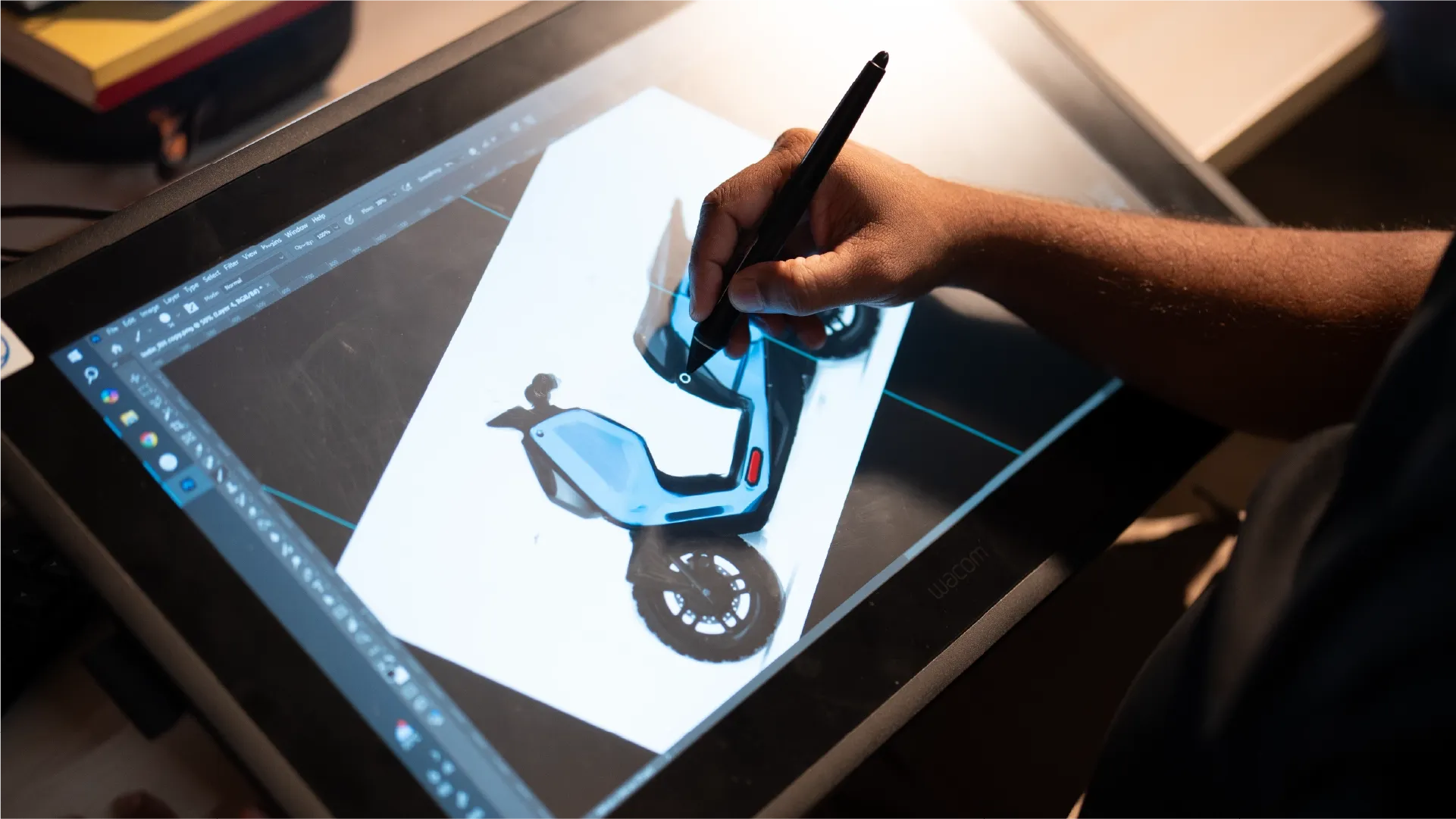
That holy-grail-of-a-sketch is what convinced both our co-founders to make River a product-first company.
This decision has inspired our teams to treat design as a solution to a problem, not just cosmetics. It is now an active, cross-company discipline. We emphasise functional design over automotive jargon. This means that the vehicle is built from the ground up to serve a purpose, making its underlying intelligence entirely visible to the person using it.
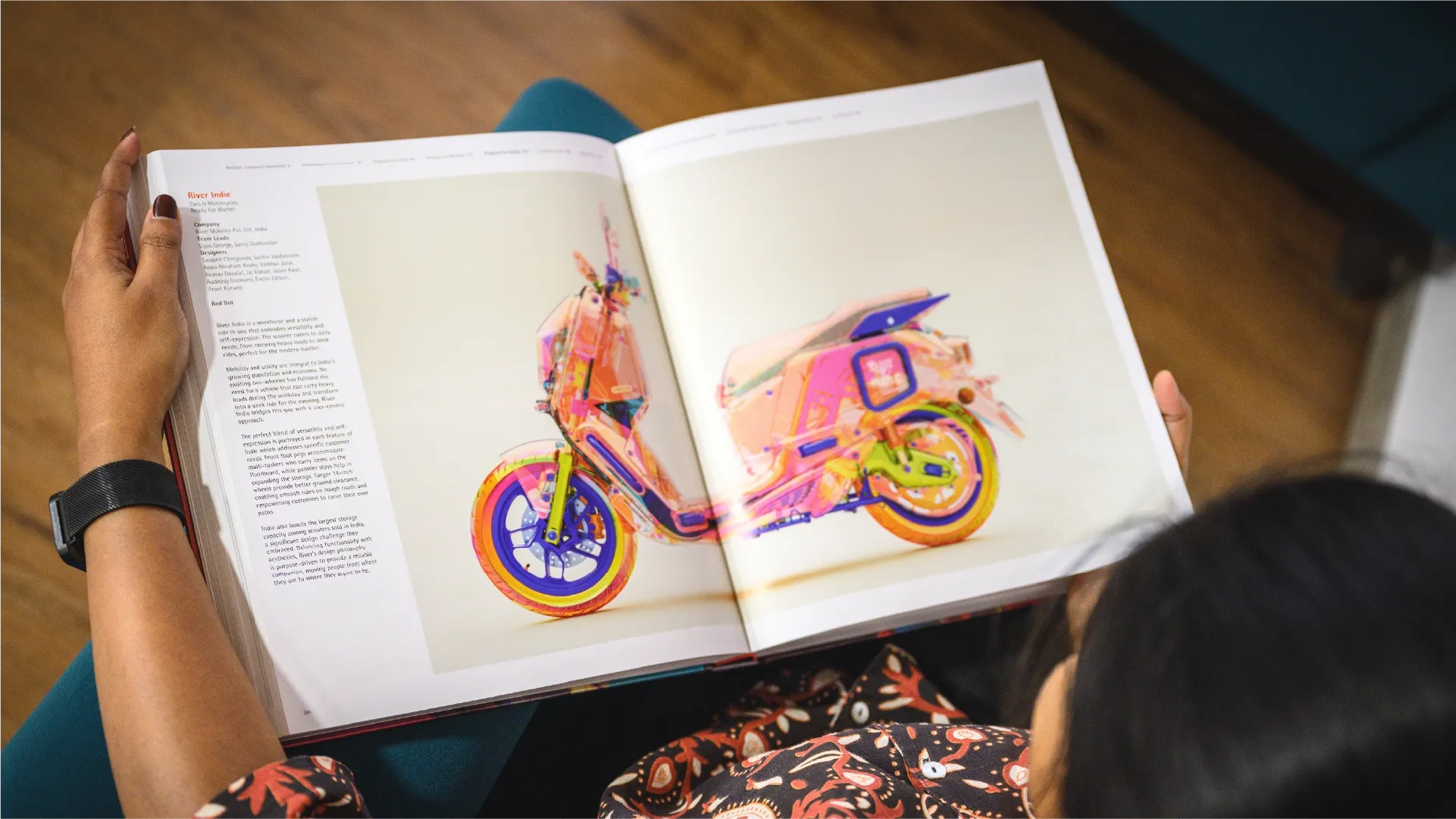
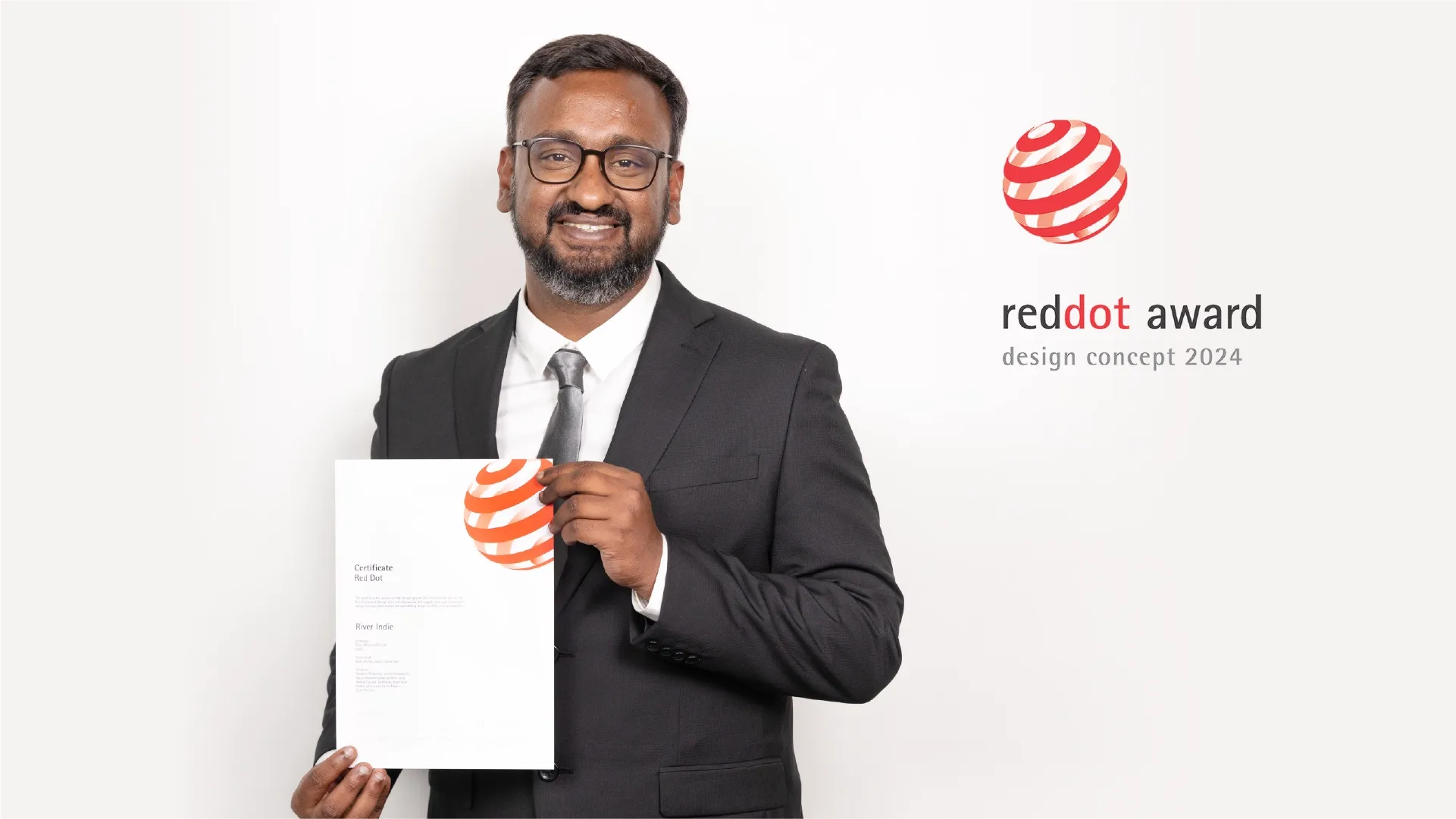
By the time the Indie was ready for launch, Vipin wanted it to be viewed as someone’s favorite pair of shoes:
“Think of your favourite shoes. Comfortable, reliable, always ready to go. That’s how we design our products: a natural extension of you, just like your shoes. It adapts to your needs, taking you wherever life takes you.”
After all, don't successful design principles always start with a focus on people?
Knowing what not to build
To build a vehicle that feels so intuitive, one has to understand the boundaries between art, design, and decoration. A cosmetic approach isn't true design; it is just decoration. Vipin doubles down on this opinion: “Our designs should have two aspects: solve something functional, and connect emotionally with the customer we are providing solutions to.”
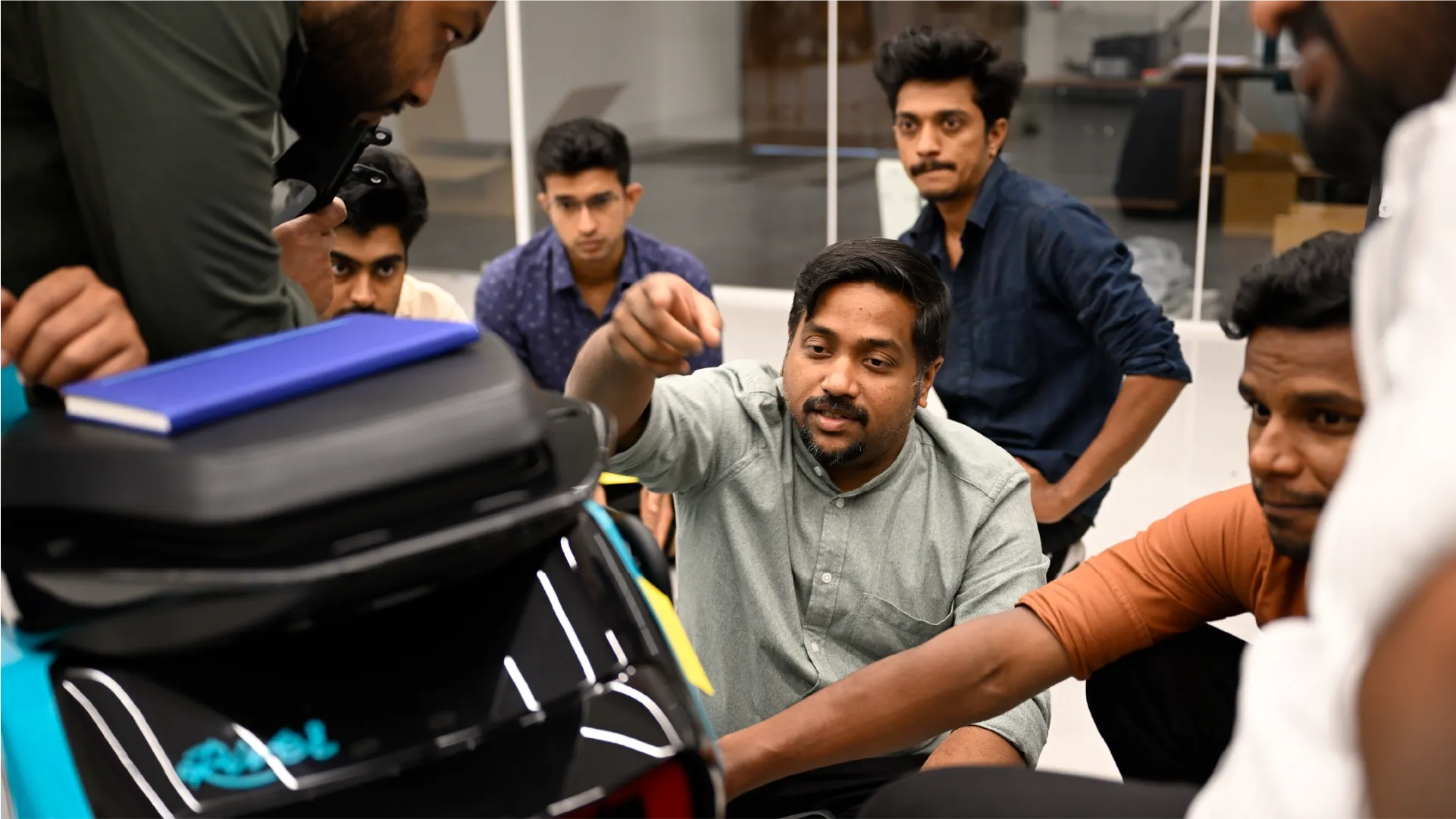
The R&D team applies design thinking as the foundational ‘brain’ for all activities. It’s a simple but rigorous process: identifying a problem or opportunity, breaking it down, finding a solution, testing it with customers, and then moving to production. This process actively shapes both our engineering and manufacturing phases.
In the engineering phase, the design thinking process translates into ‘design engineering’—a common term treated differently at River. Rather than just focusing on industrial aesthetics, the engineering team actively breaks down the core functional problems. Vipin explains how: “With the Indie, we decided through a ‘game of elimination’ to focus on everyday utility rather than vanity metrics. That’s how the goal of building the fastest motor was eliminated. Instead, the team focused heavily on load-carrying capacity. By applying design thinking to these engineering constraints, they created a highly durable chassis that's rarely seen in the conventional everyday scooter.”
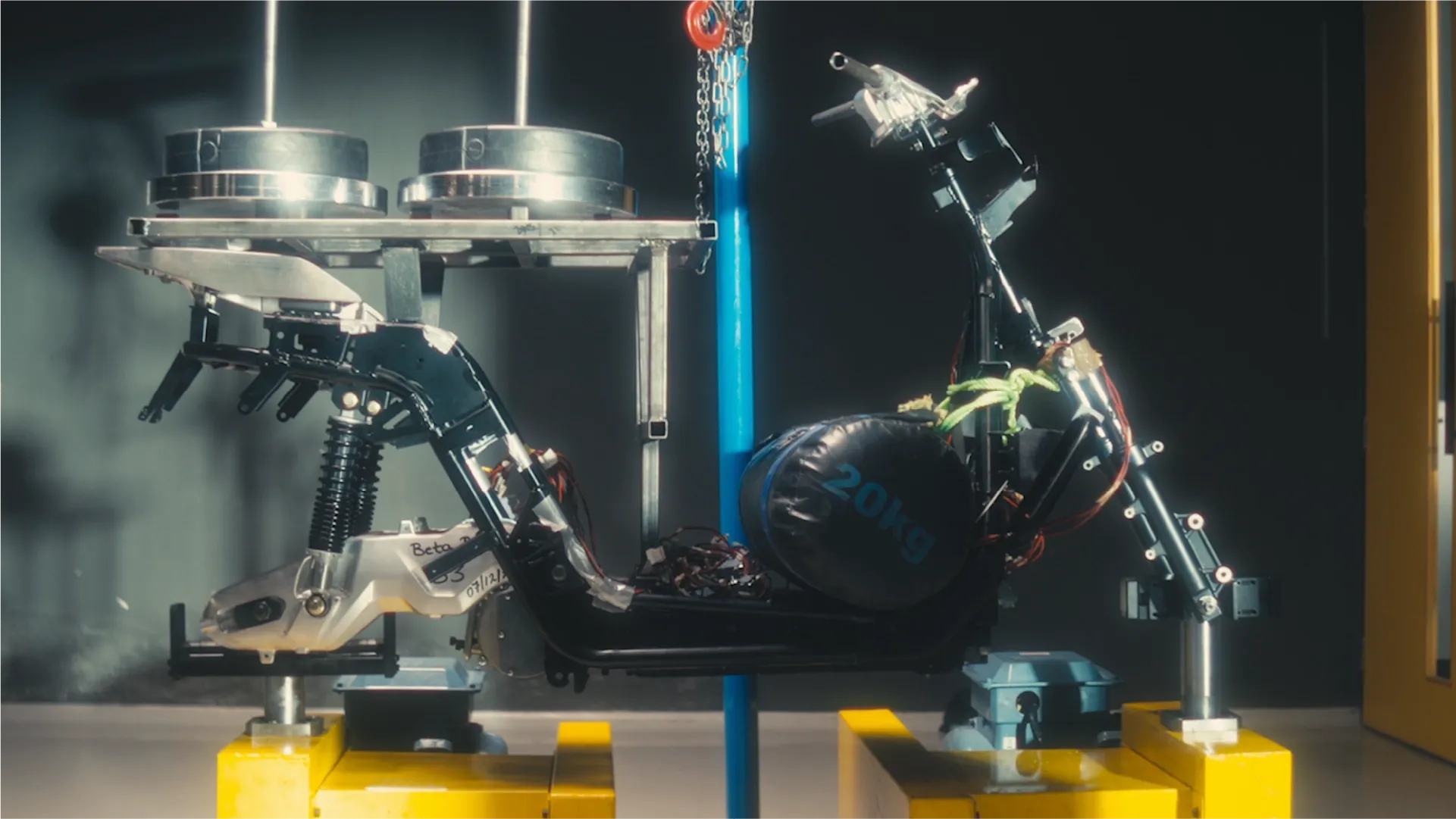
As the process moves toward manufacturing, the design thinking approach continues to guide vehicle development. The team transitions from initial sketches to physical prototypes by generating comprehensive engineering data and testing the vehicle through real-time simulations. At this stage, the design process is extended to vendors and manufacturing partners, where both teams work directly to create parts and moulds for full-scale vehicle development. For instance, the Indie’s busbars alone—a joint effort with a vendor—took almost 12 months of R&D to perfect. Finding a ‘workaround’ was never an option for either team. The busbars simply had to be indestructible against the reality of Indian roads, and function reliably for years. But take a closer look here; design thinking did more than just perfect the busbars. It also enabled us to partner with vendors who share our principles.
River uses design thinking as a filter across disciplines. This ensures our engineering and manufacturing efforts result in an honest and unpretentious product. It makes it easier to identify, and collaborate with business partners who believe in achieving customer satisfaction through good design solutions.
So why is good design such a big deal for us? Because we use it as a yardstick for success; when there’s no longer a gap between what a product does and why it exists. Seeing how the Indie fits into our customers’ daily routine so smoothly, how they stop thinking about the machine and simply enjoy its capabilities, we know that design has done its job.